Dog Parasites
Did you know that while a leisurely stroll in the countryside can be a treat for your dog, it might also expose them to the hidden menace of ticks?
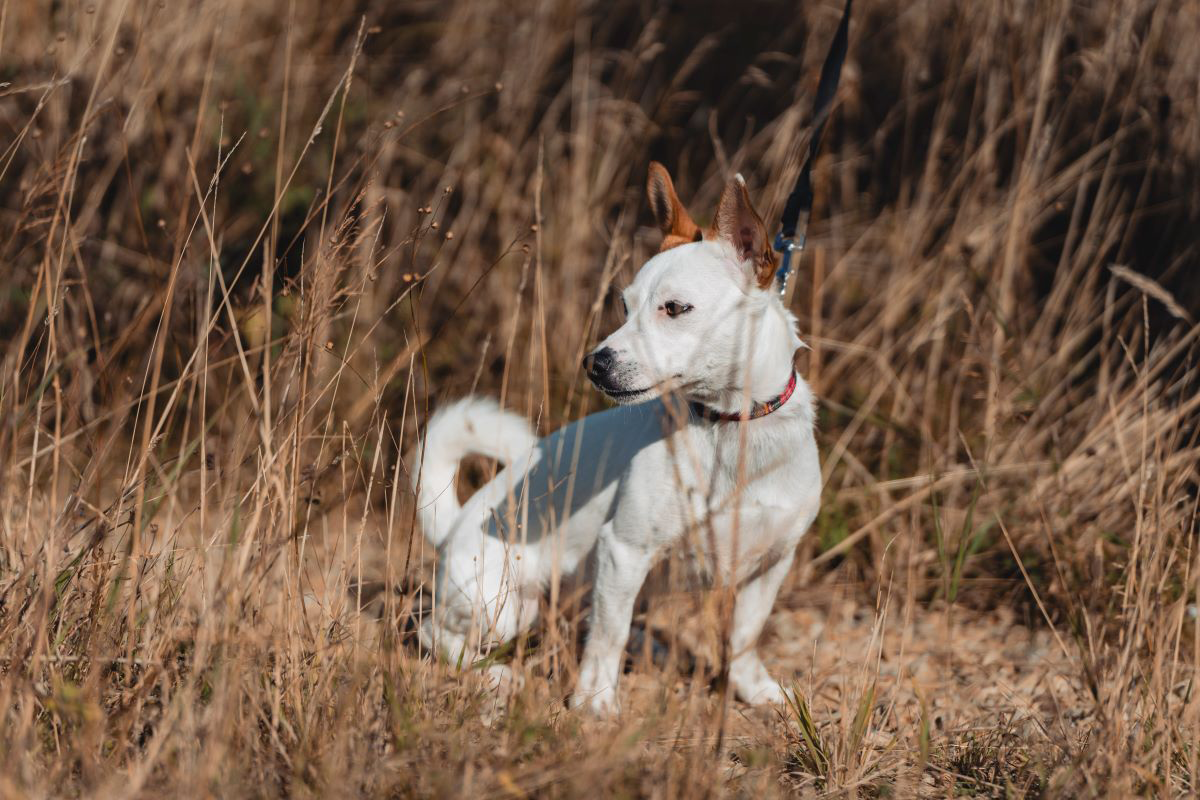
In this article, we'll take a closer look at why ticks are so dangerous and how to know if your dog has been exposed to them. We'll also discuss some of the measures you can take to keep your pup safe from these dangerous bugs.
What Are Ticks?
First, let's go through the basics. Ticks are eight-legged arachnids, belonging to the same family as spiders. Before feeding, they measure around 5mm in size, so they can be difficult to spot with the naked eye. Their immature stages – larvae and nymphs – are even tinier (less than the size of a poppyseed) and may not be visible at all.
The Tick Lifecycle
Ticks pass through several stages of development in their lifecycle. It starts with an adult female tick laying thousands of eggs. These eggs hatch into 4 legged larvae which crawl onto a host to feed (usually a mouse), and develop into 6-legged nymphs that continue to feed until they mature into adults. The adults then search for another host to feed on, before mating and laying eggs again, continuing the cycle.
Where Ticks Live
Ticks tend to live in grassy and farmland areas, where they wait to attach themselves to passing hosts such as dogs, cats, or even humans. They're a threat all year round but are most active in the spring and autumn when temperatures are milder.
How Ticks Feed
After attaching themselves to a host, ticks use their sharp mouthparts to cut through the skin and feed on the host's blood. They usually choose areas on a dog with less hair or thin hair, like the face, ears, nose, between the paws, the groin, and armpits.
Species of Ticks
There are around 900 species of ticks found worldwide, and they tend to be most prevalent in warmer climates. But through a combination of climate change, and pet importation from overseas, even cooler countries are at risk for exotic ticks that were very rarely seen before. This means that it's more important than ever for us to safeguard our dogs against these pests.
What Are the Signs Your Dog Has a Tick?
A single tick bite can cause pain and irritation for your dog. As a result, they may scratch the area, leading to skin damage and secondary infections. Dogs that are infested by larger numbers of ticks may also experience blood loss and anaemia (low red blood cells) which can lead to weight loss and illness. In the most extreme cases, heavy infestations can be a risk to life.
A tick bite can cause pain and irritation for your dog. Dogs with a larger number of ticks may also experience blood loss, anaemia and weight loss.

There are other tick-borne diseases found in different parts of the world and in other species that could become established here in the future as a result of climate change and pet importation.
How to Treat Ticks on Dogs?
Ticks can be identified by looking at your pet's fur, feeling for lumps and bumps on their skin, or noticing if your pup is itching more than usual. You can also find ticks by gently scraping the skin with a stiff card or using sticky tape to collect a sample.
If you do find a tick, it's important to remove it as soon as possible.
Dogs with a history of tick exposure or live near farmland should use suitable anti- parasite prevention in a table, collar or spot on form to prevent further infection.
The best way to prevent your dog from getting ticks is by using a tick protection product – generally a tablet, collar, or spot-on medicine. They will quickly kill any tick that jumps onto your pet.
How to Prevent Dog Ticks
The best way to prevent your dog from getting ticks is by using a tick protection product. These are generally given monthly and come in tablet, collar, or spot-on medication form. Tick preventatives will quickly kill any tick that jumps onto your pet to feed, reducing the risk that they'll spread disease.
If your dog spends time outdoors in areas where ticks may be present, it's especially important to use tick protection. The type of product you use will depend on your dog's lifestyle and risk factors, so speak to your vet about what's best for your pup.
Keep in mind that humans are also at risk, so make sure to cover your arms and legs and check yourself after a walk.
But for the most part, thanks to the range of products out there, with the appropriate preventative measures you and your dog can continue to enjoy your walks, tick-free and with peace of mind.
Explore more on these topics




Select a country and language
Regulatory constraints and medical practices vary from location to location. Consequently, the information provided on the site in which you enter may not be suitable for use at your location.
Asia Pacific


Europe

België
Nederlands
Belgique
Français

Deutschland
Deutsch

Ελλάδα
Ελληνικά

España
Español

France
Français

Ireland
English

Italia
Italiano

Magyarország
Magyar

Nederland
Nederlands

Polska
Polski

Portugal
Português

Romania
Romanian

Sverige
Svenska

United Kingdom
English
Latin America

Argentina
Español

Brasil
Português

Chile
Español

Colombia
Español

Ecuador
Español

México
Español

Perú
Español
